Layer Zero of digital identity

Proof that someone is alive on the other end.

Every check on the internet asks who you are. None of them asks whether you are still here. VAYDY streams cryptographic proof of a living body, from outside the software perimeter, for as long as the session lasts.

Heart rate62 bpm
SpO298 %
Skin temp33.4 C
Proofs sent0
Biostream verified · session open

Try it. This is the product, not a metaphor.

What happens today

The login was real. Everything after it is an assumption.

One session at a bank, minute by minute. Every step below is allowed by the security stack that is in production right now.

00:00:00

The human logs in

Passkey, face, one-time code. The check passes, and it is honest: a person was there.

00:04:12

The human walks away

The laptop stays open. The token stays valid. Nothing in the stack registers the difference.

00:04:19

An agent takes the session

Stolen cookie, remote tool or an autonomous model with API access. It inherits every right the person had.

00:11:47

Money moves, approved by nobody

The audit log shows a valid, authenticated session. It is the truth. It is also useless.

The missing layer

We do not replace security. We become its precondition.

Passwords, tokens, passkeys and biometrics all sit above identity and all inherit the same flaw: everything inside the perimeter is bits, and bits are now synthesizable. Put the source of proof outside the perimeter and the flaw closes.

Category: continuous presence infrastructure

The identity stack in production today
Security vendorsreact after the fact
MFAone moment in time
Biometricsimitable by AI
Passkeys · FIDO2proves a device, not a person
Layer Zero · VAYDYthe layer that answers: is a living human here right now
How it works

Three nodes hold the session. Break one and it dies.

Nothing here runs inside the software perimeter. The proof starts in a body and ends in a verifier, and every link in between is cryptographic.

Body
Living entropy that cannot be authored: heart rate variability, blood oxygen, skin temperature.
Device
The wearable reads the body on the skin, signs each sample and streams it over BIO Knocking.
Server
Verifies the stream against the liveness threshold and holds the session open only while it holds.
challenge returns to the device, continuously
Stop the stream and the session closes by architecture, not by policy. There is nothing left to steal, because there is nothing left open.

BIO Knocking

The transport. A continuous stream of cryptographic proofs built from live biological entropy. It cannot be generated, intercepted or switched off in software.

Biostream Threshold

The gate. Access stays open only while the signal stays above the liveness threshold, and closes the moment it does not.

Living Presence Mark

The receipt. Every sensitive action carries a signature only a living operator could produce, which is exactly what the EU AI Act now asks for.

Why this is possible now and not in 2019

The infrastructure exists. The layer does not.

1B+
Wearables already worn

The sensor layer shipped without us. Rings, watches and bands are on wrists today.

$2.5T
AI spend in 2026, Gartner

Every dollar of it raises the value of knowing whether a human is still in the loop.

$25.5B
AI in cybersecurity, 2026

Forecast to double by 2031. The budget line we sit on already exists.

2 laws
EU AI Act and NIS2

Human oversight and a kill switch stop being good practice and become obligations.

Business model

We license the protocol. We build no hardware.

VAYDY owns the protocol and the IP, the way ARM licenses an architecture and Dolby licenses a standard. Three revenue streams, one layer.

Per-session fees

Enterprises pay for verified live sessions inside their own authentication stack.

Device royalties

Wearable makers embed the protocol and ship VAYDY Certified devices.

Integration and certification

One-off fees for enterprise integration and for certifying an OEM device against the spec.

Priced against regulatory exposure and fraud avoided, not against seats

Where we stand

What is proven, not projected.

Core method filed

US provisional patent 63/904,948, filed 24 October 2025 at the USPTO. The window for the full PCT is open until 24 October 2026.

Protocol confirmed on a reference device

The stream of proofs opens a valid session. Stopping the stream closes it. That is the whole claim, and it holds.

Alpha SDK running

Node.js and Python libraries are functional and integration tested over REST.

Independent scientific opinion

Prof. Michael Segal, Ben-Gurion University, Dept. of Communication Systems Engineering: the approach is "highly original and promising" and "technically feasible within existing technologies".

What we do not claim yet: revenue, signed letters of intent, a wearable tested in the field. Those are the next twelve months.

Team

The builders behind the future of digital identity.

A protocol becomes infrastructure only if someone can carry it into banks, into standards bodies and onto a manufacturing line. That is what this team is assembled for.

Vadim Tsyvian
Vadim Tsyvian
Founder & CEO
Visionary in digital identity and deep tech systems. Author of the BIO Knocking method.

Igor Peer
Igor Peer
Co-CEO
Startup Mastery Venture Studio. Twenty-five years building innovation companies and international accelerators.
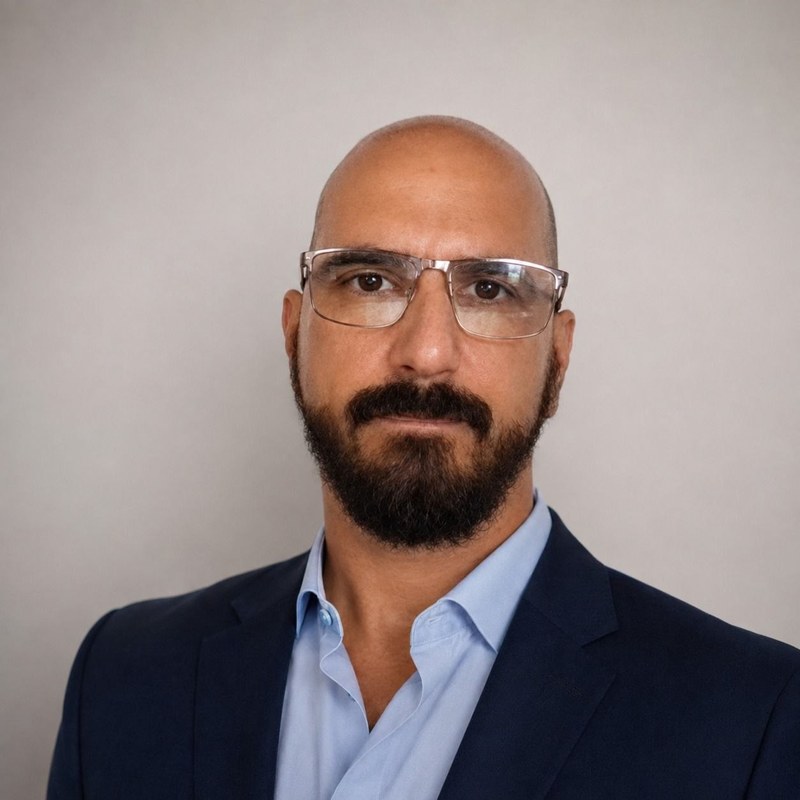
Or Cohen
Or Cohen
CTO
Leading the protocol architecture and the engineering of live presence verification.
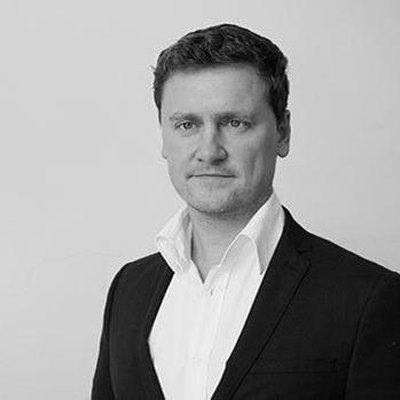
Ilja Disterheft
Ilja Disterheft
COO
Operator focused on execution, delivery and scaling.

David Arie
David Arie
Strategy
Driving market positioning and expansion strategy.
Advisory board

Backed by experts in deep tech, cybersecurity and global markets.
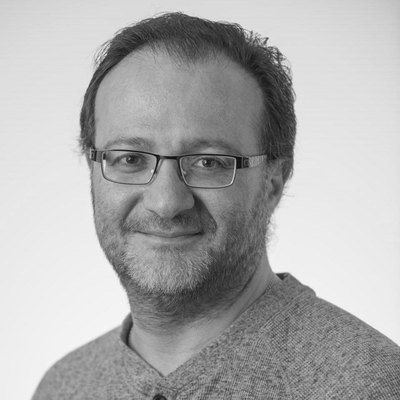
Prof. Michael Segal
Prof. Michael Segal
Cryptography
Ben-Gurion University. Author of the independent scientific opinion on the method.
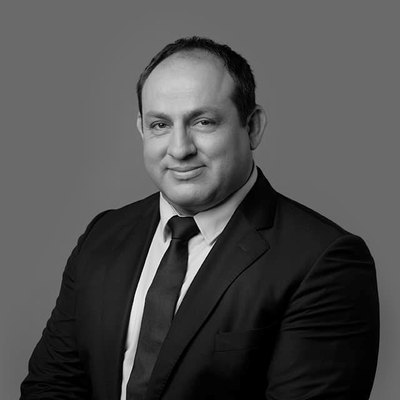
Uri Milshtein
Uri Milshtein
Tech law
Expert in technology law and regulatory strategy.

Ilan Peer
Ilan Peer
Cybersecurity
Infrastructure and threat systems.

Gay Amar
Gay Amar
Fintech
Fintech operator and growth strategist.
Get in touch

Human presence, embedded into the architecture of the internet.

For banks and fintechs putting an AI agent near money, for wearable makers who want their device to mean something, and for investors in identity infrastructure.

Vadim Tsyvian · Founder and CEO · Israel